March 1, 2012

Forging Peace through Friendship

Francis Parker School - South to North - Day Nine

Good morning Vietnam! (Bet you weren’t expecting that one).

We were unable to blog yesterday because our group is currently boarding a night train to Sapa. Yesterday, however, we had a relaxing start, and once again, had a delicious buffet filled with noodles, bread, and cereal. After breakfast, we spent the majority of our day in the Friendship Village. We were welcomed into an elegant stateroom by gracious hosts, where we met the soft-spoken Mr. Zung, the director of Village. He explained that since the Friendship Village opened in 1998 the organization has welcomed and treated over 600 children. The village also provides medical treatment, rehabilitation and temporary boarding to Vietnamese veterans. One thing that our guide could not reiterate from the veterans and members of the village was peace and friendship.  

After playing soccer for about 15 minutes, we gathered into a room with four tables all placed with warm plates and hot food. There we proceeded to have a lunch filled with laughter. We all noticed that they are a generous organization, despite the limitation on resources. As part of our service project, we spent at least an hour and a half collecting three oversized wheelbarrows worth of trash that was once scattered throughout the village. Later, it evoked a discussion among the group about the ever-growing problem of the disposal of trash. It was rewarding to see the difference our group had made cleaning up the once trash-littered compound.

We had the exciting opportunity to give our donations and participate in the classrooms. There, groups of three helped children learned various subjects while others assisted in making creative art work. One group provided guidance about fractions and unit conversions. The others helped the children paste scraps of paper and place them within a square drawn on a piece of paper. After our time in the classroom, we visited several art studios. There, we saw intricate embroidery. Do not be surprised if we return home with a new addition to the family art collection. Next we toured the “sew room.” This provides vocational training and an eventual exit into the job market. It is quite amazing to see children affected by Agent Orange, yet still have a wonderful outlook on life.  With heavy hearts we said goodbye to our new friends in the Friendship Village.

Everyone was looking forward to dinner because of the slight fact that western food was promised. Pizza, pasta, and French fries were scattered upon the table. Most members pigged out while some were still struggling to keep their food down. Then for the final time we said “lời tạm biệt” to the Imperial Hotel, which provided excellent accommodations. On a final note, please forgive the rushed nature of this blog because we are preparing to board the train to Sapa. As of now, we approach Sapa with great optimism and excitement.

Best Regards,
Melissa Shega & James Wamsley

Lessons in War and Peace

Francis Parker School - North to South - Day 8

It was our first day waking up in Ho Chi Minh City, or Saigon, as most locals still call it. After being toured around the city by our new tour guide, Mr. Trang, we headed to the Vietnam War Remnants Museum, and had more than an hour and a half to explore the multi-tiered building. First, we checked out the prison exhibit and learned about the despicable acts of torture that were inflicted upon political prisoners in South Vietnam. The worst was the tiger cage, a 5 by 7 foot barbed wire box that 3-5 people were crammed into for days at a time. Then we made our way into the main building, and saw exhibits documenting the effects of the war on Vietnam, and it gave us a new perspective on the war. Downstairs we saw the world's opinions of the US during the war, with pictures of protests in the US (like those at Kent State) and in the rest of the world. Another exhibit traced the long-term effects of agent orange on both Vietnamese and American soldiers, and especially their decendants. Although the museum had heavy undertones, we were uplifted by an exhibit completely dedicated to children's drawings that illustrated hopes for world peace and understanding.

We left the museum and had time to spend about an hour in the market. First, we strolled by the produce section, which meant squirming live frogs, crabs, and fish, and smell none of us had ever had the pleasure of experiencing before. We were able to practice our bargaining skills; we keep hearing we'll need them in the Mekong Delta, but that waits to be seen. 

For lunch, we changed things up a bit: Italian food. Most of us were pretty excited to hear that pizza, pasta, and garlic bread were in our futures. Although it was good, it wasn't up to par with the Italian food we are used to at home. It elicited a little bit of homesickness, but we're still good to go for the rest of the week.

After freshening up in the hotel, we left for the the Little Rose Shelter, a rehabilitation home for girls who were forced into the human trafficking business. To be honest, we would have like to spend some more time there. The purpose of the visit was to raise our awareness of human trafficking in the world, but the tour of the building and some brief games with a few of the girls was not nearly enough to learn about such a crippling problem. 

We don't even know how to describe our eventful evening. It began with a water puppet show; the puppeteers manipulate the puppets so the puppets appear to float across the water. It was an entertaining concept, and we learned some traditions and cultural ideals of Vietnam.

Then... get ready... DINNER ON A RIVERBOAT. Yes. We climbed onto a huge river boat, had a three-course gourmet meal served to us, and watched Spanish Flamenco Dancers (we were confused too) dancing to Abba and other various genres as we ate. It was unexpected, yet completely unforgettable. 

Off to the Cu Chi Tunnels tomorrow, then our last stop of the trip in the Mekong Delta! 

Cháo!
Joey, Savannah, and Walker

February 29, 2012

South to Saigon

Francis Parker School - North to South - Day Seven


Our group awoke Sunday morning on our beloved night train around 5:35, and quickly exited. Everyone seemed very tired after so much traveling in a short time. Us students were excited to hear that we would be returning to our Hanoi hotel where we would meet up with the South to North group for breakfast and discussion. After a short bus ride, we were back at the hotel, where we were greeted warmly by Mr. Taylor and his crew, a few students who had woken up early enough to meet us. Amid a buffet breakfast and a familiar view of Hanoi, old friends gave each other tips on how to best enjoy the opposite trip. Aside from a few notes on wearing bug spray and the quality of the food, the other group preferred to keep much of their experience to themselves, which hopefully will let us shape our own experiences.

We headed to the bustling Hanoi airport. It was sad to cross the Red River for the last time. We all said our goodbyes to Alex, our tour guide, who had led us around the North, and who Ross especially had grown close to in such a short time. We boarded our flight on Vietnam Airlines, which, to our surprise, was a huge and nice plane. Among other Vietnamese passengers also making the journey from the North to the South, we were able to discuss our trip thus far. 

The first thing we noticed after landing was the humidity and heat of Saigon, a sharp contrast from our Northern home bases. We applied our bug spray (after hearing the other groups' experiences) and headed out into the hot city air. Our new guide Trang awaited us with a smile and a Vietnamese song. We boarded yet another bus which took us into downtown Saigon. Immediately we noticed the contrast between this city and Hanoi went further than the weather. The shops were well settled, Westernized and developed, as opposed to the Hanoi street vendors. Stores such as Louis Vuitton lined the roads, instead of knockoff booths. The street traffic was a lot lighter and seemed more organized, posing less danger to students crossing the streets. 

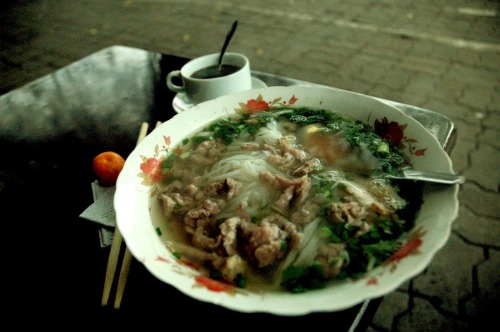
We ate lunch at Pho24, a chain noodle soup restaurant, which we had previously visited in Hanoi. Pho was nothing new or exciting, but the famliar chicken soup was enjoyed by all. Since our hotel rooms weren't yet ready, we decided to explore more of Saigon. Our first stop was the Presidential Palace, a 70s-style building flocked with tourists like us. We were able to enter and explore meeting rooms, dining rooms, radio facilities, and a museum. The building, used by the Southern Vietnamese government, was well-protected yet somewhat modest, a contrast to American government buildings and even political sites like the Ho Chi Minh mausoleum which seem lavish and over-the-top. However, it was well-preserved and clearly respected by the Vietnamese people.

We headed to our hotel and then out to dinner, which to our amusement featured decorated food such as a large melon carved like a clown and stuffed with fish. The food seemed similar to what we were used to in the North with a few pleasant surprises like chocolate-coffee ice cream to end the meal.

Back at the hotel, we collected our dirty clothes for some much-needed laundry. We were interested to find that many Vietnamese utilize laundromats, unlike Americans who are used to doing it in the comfort of their own homes. We were then given the opportunity to explore the city on our own and immerse ourselves in the nightlife of Saigon. The group traveled to a six-story ice cream parlor with an exotic menu. The building's size was a change from Hanoi, which featured buildings with stores on the first floor only and homes on the second stories. Some opted for the traditional banana split at this ice cream parlor, while others sampled avocado ice cream. 

We then headed towards the local market, an outdoor mecca of knockoff goods and jewelry. We were forewarned about the dangers of thieves and pickpockets, so we traveled cautiously, but the people we encountered were mainly pleasant, if not a bit pushy with their goods, much like the women of Sapa.

Many of us exercised our bargaining skills which we had developed in Hanoi and Sapa, utilizing our two-dollar bills to lower prices. The market seemed much less chaotic and more organized than any we had seen previously, with each stall specializing in a unique product. The vendors seemed accustomed to tourists and spoke English well, so we assumed that most who went to the market were probably not locals. Their desire to appeal to us Americans reflects what we think to be Vietnam's shift to a global economy. 

We returned to the hotel tired but cheerful as we examined each other's purchases and headed off for some much-needed sleep before another day in the city!

xoxo
Emily and Gonzalo  

February 21, 2012

Community Service and Cultural Exchange at Friendship Village

Francis Parker School - South to North - Day Eight

We awoke this morning to familiar faces. Our dear friends on the North to South trip came to our hotel for breakfast before their flight Ho Chi Minh City in the South. It was refreshing yet awkward to see these relative strangers. Shortly after the other group left, our dynamic pod, led by the one and only Eric Taylor, once again was immersed into a day full of activity. First on the list was a Water Puppet Show, which was within walking distance from our hotel, the Imperial.

The Puppet Show was very professional and entertaining. To begin the show, the orchestra, comprised of about eight people, began to play a few pieces. The musicians were very skilled and played notes in key and were very precise with their strokes. Then the Puppet Show began. It was like nothing we had ever seen before. This extraordinarily unique experience introduced us to an art form that is neglected by Western Society but is truly beautiful. Basically, breaching the surface of a man-made water area were puppets who, controlled by puppeteers in the back, created scenes describing Vietnamese life and the country’s rich history. Vietnamese culture poured out of this piece and we were all moved by the show. We then, after some much needed free time, went to lunch. This lunch was unusual. We had a buffet and were exposed to American food for the first time since we left. It was filling and enjoyable. (David and Max ate a really hot pepper).


After lunch, our group headed outside the city of Hanoi to the Friendship Village, a community built by Vietnam War veterans from both America and Vietnam to shelter individuals affected by the chemical Agent Orange that was sprayed by Americans during the war. At our arrival to the village, we were led out to the community’s garden where we helped prepare the soil for future gardening. The work was not easy, but a few hours of labor turned out to be quite rewarding, 
considering that most of us had never worked out in a garden for longer than ten minutes before today.

 Afterward, our group went to the other side of the village to meet with Vietnam War veterans. Of course, we couldn’t directly converse with the veterans, but our tour guide Quan translated for both us and the veterans. We asked questions about reconciliation and what the veterans think of America today, but most of the answers that we heard seemed to steer away from our questions, whether because the veterans didn’t want to answer our questions or because our questions weren’t translated fully. The veterans’ answers revolved around forgiveness and accepting the past for what it was. Though the language barrier was surely frustrating for both sides of the conversation, overall, our exchange with the veterans was surreal considering that in 
America, we hardly get to see the other side of a conflict. 

As soon as we left out discussion with the veterans, we were greeted by a few kids staying in the village and a group of high school students from the Czech Republic. We played a quick game of soccer and socialized with the kids before loading onto the bus and heading to a nice French inspired restaurant for dinner. Our food was delicious and we can’t wait for another wonderful day in Hanoi tomorrow.

— Jennie and Josh

February 20, 2012

Ho Chi Minh and Other Reflections from Francis Parker Students

Francis Parker School - South to North - Day Seven

Hello Everybody!

Our first full day in Hanoi was very active. We awoke to overcast skies, a slight mist, and a welcoming buffet. After eating we walked to the Hoan Kiem Lake at the center of Hanoi to visit Turtle Tower. Once there we learned about a 169 kg turtle living at the bottom of the lake. She is supposedly a last descendent of the Golden turtle god, possessor of a magic sword that helped the emperor defeat the Chinese and gain independence. After this we went to Ho Chi Minh’s Mausoleum. This granite vessel houses the body of Ho Chi Minh, creator of the Socialist Republic of Vietnam. His mausoleum is very similar to Lenin’s in Moscow. Everyone could feel Ho Chi Minh’s presence as we walked past his body, understanding that this man will forever be an integral part of Vietnamese history and a symbol of national pride. Ironically, it was Ho Chi Minh’s wish that he would be cremated. All of this extravagance comes in direct contrast with Ho Chi Minh’s wishes. Next, we visited Ho Chi Minh’s houses. Although Ho Chi Minh was offered the opportunity to live in the Presidential Palace, he refused. Instead, he requested that a house-on-stilts be built instead. This house is reminiscent of a typical home among the hill-people who lived in his village. Before lunch, we visited the one-pillar pagoda. This pagoda was built by Emperor Ly Thai Tong to give thanks to Bodhisattva, the god of mercy after he was given the son he always wanted. Due to the stringent laws regarding the number of children a family can have, this pagoda is still used.


After lunch, we visited the Hoa Lo prison, commonly known by Americans as the “Hanoi Hilton.” This prison built in 1896 was first used by the French to subdue the Vietnamese patriots who were fighting against French control. For this reason it was another symbol of national pride. However,  from 1964 to 1973, the Vietnamese used this prison as a holding cell for American prisoners of war, thus garnering the name “Hanoi Hilton,” a sarcastic term that underlies a deep resentment for the POW's treatment in Vietnamese hands. The Vietnamese government used propaganda to contrast the treatment of Vietnamese by the French and the treatment of the Americans by the Vietnamese in order to create an image of moral superiority. While the Vietnamese were shackled to tables under French rule, the Americans were given Christmas dinners and were allowed to play volleyball in the yard under Vietnamese rule. Just after visiting the Hao Lo Prison, we each got in rickshaws and were given a one-hour tour of the city. Although the sightseeing was fantastic, the idea of the rickshaw was appalling in that it was reminiscent of early colonial aristocracy, where the rich paid peasants to drive them around. Nevertheless, the ride was memorable and the busy afternoon was full of energy. The day concluded with a two-hour city exploration and tour bus karaoke, with performances by Steven, James, Max, and Tony.

Hearts and Hugs,
David and Katie P

A Homestay and Life on the Mekong River

Francis Parker School - South to North, Day Four and Five

Last night was our first night at the homestay. We were not able to publish our blog in the river delta during the home stay, so here is our follow-up. The beds were firm, yet soft and were protected by very useful mosquito nets. The family who owns the house is very generous and has two adorable children; they give us a bountiful feast every meal; include today’s breakfast of eggs, bread, and traditional Vietnamese sides. After breakfast we got on to our boat and headed across the Mekong River to start our adventures.

The journey continued upon arriving at the bustling markets at the Mekong River Delta. We had the special opportunity to see and taste the making of traditional Vietnamese candy. Coconut, rice, ginger, and sugar appeared to be the magic ingredients of the candy making practice. After tasting the sugary delights, sipping tea, and buying treats, we walked into a rice paper making operation in which five women were working hard. The hot steam slowly creeping from their stations wafted into our faces and made the whole crew drip with sweat. Five minutes of the steamy room seemed like enough for us, yet for these women they were used to working 7 hours a day and making 3,000 rice papers. Nonetheless, they only made 100,000 dong a day which is roughly $5. Although this seems incredibly small to us, Hau told the group that the per-capita GDP was roughly $1,000-$3,000 a year.

We sure are lucky to have a tour guide like Hau because being affiliated to the party, he is granted special access to almost anywhere he likes. Therefore he has the ability to walk into a shop that may be of interest to us to show us around. This especially was useful when we visited the school...

After walking around the Mekong, our journey continued to the floating markets. At the market we had to fulfill a shopping list for dinner. We walked through the majestic market, full of interesting sights, smells, and sounds. We had to learn the ways of the Vietnamese people by haggling for our vegetables, yet we faced issues with communication. I’m sure we got ripped off multiple times considering since all we could do was hold out money and ask how much. Mr. Hau split the group into two teams to see who could complete the shopping list and spend the least money. Of course tem Toney won which included the champions Zach, Josh, Jenny, David, Katie, James, and Meagan. You can probably deduce who the losers were. After our market exercise we took some small row boats through the beautiful mangroves of the Mekong. We then got to refuel for lunch. Lunch was again fantastic, but even more special was that the restaurant had a 10 foot long pet python who did not have a name... so we named it Nadini. The brave had a chance to hold the snake and with a great effort we even got Josh to hold Nadini.

After the morning trekking trekking had been completed, we commenced on a bike ride through the woods and houses of the local village. Motor scooters whizzed past us, contributing to the hectic atmosphere. Under a beautiful sky and over streams we passed until David’s bike broke, but Mr. Hoa was there to save the day and mend the broken piece of metal. We were luckily not too far from our destination: a school with students our own age. Initial greetings were awkward with the language barrier, but everyone was friendly. We immediately started a game of volleyball and soccer afterwards. We shared laughs and learned each other's names, but eventually had to leave with the promise of returning the next day. After a short ride back to the home stay we quickly refreshed. Members of the family played traditional music using a distortion guitar and Monowar. Songs were sung about young farmers experiencing love and women paddling along the river. We then joined the women in the house and all twenty plus of us fit in the kitchen! We cooked an omelet-like dish though it was made with flour and filed with shrimp. After dinner Mr. Hoa gave us more competitions for the teams to compete, though these were more game like. In one game two members of one team were tied together by the ankle and balloons were tied to the opposite ankle. Then the teammates fought against a pair of similarly constricted competitors, trying to pop one another’s balloons. We were then given free time to shower and to soak in the cool darkness of the night.

Day 5

Greetings readers,

Like yesterday, we began our day by hopping on our ferry to cruise down the Mekong Delta. After a twenty minute boat ride, we arrived at our first stop: a Vietnamese produce and livestock market. In addition to cartloads of vegetables, fruits, and various roots, the market contained hundreds of live animals – fish, shrimp, squid and eels swam and flopped around in shallow pools of water; chickens, snakes, and frogs stumbled around on land; and dozens of other species were in various stages of dismemberment. While the three vegetarians of the group (Mr. Taylor, Ms. Stafford, and Megan Babla) were especially disturbed, we all felt a strong sense of shock when facing the stark realities of food production in a developing country. Before getting back on the boat, we bought a new soccer ball, a pair of goal nets, and two pairs of goalie gloves for the school we visited yesterday.

After the stop, we sailed back down the delta to a pottery kiln, where a team of potters spent their lives firing clay bricks inside a row of gigantic cinder-block kilns. The kilns were massive, nearly forty feet tall each and twenty times the size of the Parker pottery kiln. Next, we walked to a woodworking shop where coffins were produced. We learned that the custom is to purchase a coffin for any family member older than 60 and keep it for the person until they died…which could sometimes take decades. In the interim, the coffins were kept in the local woodworking shed and the giant room of soon-to-be-filled coffins creeped us out a little.

We sailed back to the homestay for a quick lunch (and a few card games) before getting on our bikes again to visit the school one last time. On the way, we stopped at a plant nursery to see some of the local flora and explore the Mekong’s natural beauty. When arriving at the school, we found it empty; apparently, in Vietnam, students don’t go to school on Thursday but do on Saturday. However, a few of the students (our friends from yesterday among them) returned to school on Thursdays to use the facilities, and we were able to put up the nets (which actually fit!), inflate the soccer ball, and start up six-on-six soccer and volleyball games with the students. The soccer game was incredibly competitive and enjoyable. Afterwards, we said goodbye to the students and biked home, sleeping early to prepare for a 5 am wake-up the next day.

-Alec Heifetz and Joseph Haack

Hiking, Water Buffalo, Rice Paddies & Karaoke

Francis Parker School - North to South - Day Six

Friday morning was slow. Everyone got up at different times to explore the town and to get breakfast. It was nice to observe the cloudy covering in Sapa before the tourist activities started. We met up again before lunch and checked out of the hotel to embark on our hike down to the village of Tavan. The three hour trek down the mountain side through the mud and mist was a good time for us to discuss our best experiences so far. It also allowed us to talk with the Hmong women who followed us for miles trying to sell their handcrafted clothing and bags.The Hmong people speak English fairly. It isn't surprising given how many times they have practiced heckling tourists like us.


Walking through the village we saw water buffalo's, pigs, chickens, and dogs roaming freely from house to house. Each home was placed on a rice paddy terrace, which made for an amazing view. Since summer is the growing season, the tiered planting ledges were flooded with water.

Eventually we reached a local school where a few of the students engaged in a game of soccer. Then, just before dinner, we arrived at our homestay. It was a two-story house with the living room, kitchen and a few beds on the bottom floor. The top floor was filled with mattresses and mosquito nets. The students found their spots on the floor and we passed time playing games and telling stories. The family who owned the house was very accommodating and the dinner they prepared for us was delicious. Their two young children found a particular liking for Patrick Riley's good company, Ross's iPhone, and Mrs. Imbimbo's Elmo stickers.

After we ate, we went back up stairs to continue our gaming. Soon, we were interrupted by the blaring sounds of a 1980's Karaoke machine coming from downstairs. We spent the rest of the evening swapping off mics and singing classic tunes. Just as we started to dive in to singing The Beatles, a few drunk Danish tourists joined our party. Their performance was so poor we had to kick them out. After countless attempts at scoring a 100 with songs like "Bennie and the Jets" and "Piano Man," Maddie, Solia, Ross, and Mr. Crowley finished off the night with a perfect score singing "Sweet Caroline."

A good 30 minutes later, our singing falsettos could still be heard fading into the night. A slow day in the countryside was a nice change from the bustling city life in Hanoi and the nagging vendors in Sapa. Our night in the village allowed our group to bond and acknowledge the happiness in a simple lifestyle.

Our tour guide, Alex, has continued to enlighten us with his jokes, while still relaying useful information about the history and culture of Vietnam. We really do not want to leave him as we will soon head south to Saigon.

Ross, Solia, Matsuo, Collin