September 21, 2013

Vietnam Legacy: Finding G.I. Fathers, and Children Left Behind


SALTILLO, Miss. — Soon after he departed Vietnam in 1970, Specialist James Copeland received a letter from his Vietnamese girlfriend. She was pregnant, she wrote, and he was the father.

He re-enlisted, hoping to be sent back. But the Army was drawing down and kept him stateside. By the time Saigon fell to the North Vietnamese in 1975, he had lost touch with the woman. He got a job at a plastics factory in northern Mississippi and raised a family. But a hard question lingered: did she really have his child?
“A lot of things we did in Vietnam I could put out of my mind,” said Mr. Copeland, 67. “But I couldn’t put that out.”
In 2011, Mr. Copeland decided to find the answer, acknowledging what many other veterans have denied, kept secret or tried to forget: that they left children behind in Vietnam.
Their stories are a forgotten legacy of a distant war. Yet for many veterans and their half-Vietnamese children, the need to find one another has become more urgent than ever. The veterans are hitting their mid-60s and early 70s, many of them retired or infirm and longing to salve the scars of an old war. And for many of the offspring, who have overcome at least some of the hurdles of immigration, the hunger to know their American roots has only grown stronger.
“I need to know where I come from,” said Trinh Tran, 46, a real estate agent in Houston who has searched in vain for her G.I. father. “I always feel that without him, I don’t exist.”
By some estimates, tens of thousands of American servicemen fathered children with Vietnamese women during that long war. Some of the children were a result of long-term relationships that would be unimaginable to the veterans of the wars in Iraq and Afghanistan, where interaction with local people was minimal. Others were born of one-night stands. But few of the fathers ever met their offspring, and fewer still brought them home to America.
After the war, those children — known as Amerasians — endured harsh discrimination and abject poverty in Vietnam, viewed as ugly reminders of an invading army. Shamed by reports of their horrible living conditions, Congress enacted legislation in 1987 giving Amerasians special immigration status. Since then, more than 21,000, accompanied by more than 55,000 relatives, have moved to the United States under the program, and several thousand more have come under other immigration policies.
Many arrived expecting to be reunited with their American fathers. But the United States government did not help in that cause, and only a tiny fraction — perhaps fewer than 5 percent — ever found them.
So many Amerasians continue to search, typically working with little more than badly translated names, half-forgotten memories and faded photographs.
And some veterans are doing the same, driven by heartache, or guilt, to find sons and daughters. “It’s like the mother who gives up their kid for adoption,” said George Pettitt of Wales Center, N.Y. “You just never stop thinking about it.”
Mr. Pettitt, 63, enlisted in the Army after dropping out of high school and was in Vietnam by age 19. During his year there, he developed a relationship with a Vietnamese woman who did laundry for soldiers. Soon she was pregnant.
“I was taking comfort in having a girlfriend like that,” he said. “I never meant for her to get pregnant.”
He returned home to western New York, lost touch with the woman, got a job driving trucks and raised a family. But when he retired for health reasons in 2000, he found himself haunted by memories of the child he left behind — a boy, he believes. He paid a man to look in Vietnam, but the trail went cold. This year, a woman in Virginia called to say she thought her husband might be his son. But a DNA test was negative.
“I was hoping this was it,” he said. “I just feel so guilty about all this.”
Yet against the odds and despite the many years, children and fathers sometimes find each other.
Cuong Luu was born in Vietnam, the child of an American soldier who met his mother when she cleaned his apartment. The soldier left Vietnam before Mr. Luu was born, and his mother lost contact with him. Soon after, she married an American who worked for the military. He moved the family to the Virgin Islands when Mr. Luu was a toddler.
Mr. Luu inherited many of his father’s features, and in the black neighborhood of St. Thomas where he grew up, he was taunted for being white. His mother also shunned him, he said, perhaps ashamed of the hard memories he evoked.
At the age of 9, he was in a home for delinquent boys. By 17, he was living on the street, selling marijuana and smoking crack. At 20, he was in prison for robbing a man at gunpoint. When he got out, his half sister took him to Baltimore, where he resumed selling drugs.
But then he had a daughter with a girlfriend, and something inside him changed. “I worried I would just go to jail and never see her,” he said of his daughter, Cara, who is 4.
Long plagued by questions about his identity, he decided he needed to find his biological father to set his life straight. “I wanted to feel more whole,” said Mr. Luu, 41. “I just wanted to see him with my own two eyes.”
The quest became an obsession. Mr. Luu spent every night on his computer, hunting unsuccessfully until he realized he had spelled the name wrong: it was Jack Magee, not McGee.
He discovered references to a Jack Magee on a veterans’ Web site and, through Facebook, tracked down a man who had served in the same unit. “What do you want from Jack Magee?” the man asked. “I just want a father,” Mr. Luu replied. “Your dad wants to talk to you,” the man wrote back not long after.
Mr. Luu had his DNA tested, and it was a match. In November, Mr. Magee, a retired teacher from Southern California, visited Mr. Luu on his birthday. An awkward relationship, full of possibility but not untouched by resentment and wariness, was born.
Mr. Magee now calls his son weekly, checking to make sure he is still working in his job cleaning hospital rooms in Baltimore. He also shipped a used Toyota Corolla from California to Mr. Luu, who had been commuting by bus.
“I was stunned he was out there,” Mr. Magee, 75, said in an interview.
Now that he has found his father, Mr. Luu said, he feels stronger. But the discovery, he has realized, has not solved his problems. What can a former felon do to make a better living? Go to college? Start a business? Drug dealing remains a powerful temptation.
“I just wish I had met him before,” Mr. Luu said. “He could have taught me things.”
Brian Hjort, a Danish man who has helped Mr. Luu and other Vietnamese track down their fathers, says Amerasians often have unrealistically high expectations for reunions with fathers, hoping they will heal deep emotional wounds. But the veterans they meet are often infirm or struggling economically. Sometimes the relationships are emotionally unfulfilling.
“I try to tell them: I can’t guarantee love,” Mr. Hjort said. “I can only try to find your father.”
Mr. Hjort, 42, is among a small coterie of self-trained experts who have helped Amerasians track down fathers, mostly pro bono. An industrial painter from Copenhagen, he first met Amerasians while traveling through Vietnam and the Philippines two decades ago and was struck by their desperate poverty.
One asked him to find a friend’s father, and to his amazement he tracked the man down even though he had no knowledge of military records. News of Mr. Hjort’s success traveled rapidly through Amerasian circles, and he was soon besieged with pleas for help. Moved by the Amerasians’ suffering, he took on more cases, charging only the cost of his trips to Vietnam. He created a Web site, fatherfounded.org, that brought more requests than he could handle.
Working in his spare time, he has found scores of fathers, he estimates. Some had died, and many others hung up on him. A few have threatened to sue him. But perhaps two dozen have accepted their children. And in recent years, veterans, too, have begun asking for help. James Copeland was one.
In 2011, Mr. Copeland, by then retired, began reading about Amerasians’ miserable lives in Vietnam. Appalled, he decided to search for his own child.
He found Mr. Hjort and sent him money to visit Vietnam. Armed with a few names and a crude map, Mr. Hjort found the village where Mr. Copeland had been based and tracked down the brother of an Amerasian woman who was living in America and who Mr. Hjort believed was Mr. Copeland’s daughter.
Mr. Hjort sent a photograph of the woman and her mother to Mr. Copeland, and his heart jumped: he instantly recognized the mother as his old girlfriend. His hands were shaking with excitement as he dialed the daughter’s number and asked: “Is this Tiffany Nguyen?”
In the coming days, he visited her, her mother and her three brothers in Reading, Pa., where she runs a nail salon at the Walmart. Ms. Nguyen and her three children spent Thanksgiving 2011 with him in Mississippi. For a time, they talked nightly, and she told him about how her mother had protected her from abuse in Vietnam, about their struggles to adapt to the United States, about how she had studied older men at the Walmart, wondering if one of them was her father.
“There were a lot of years to cover,” Mr. Copeland said. “I can sleep a lot better now.”
But the reunion has also brought him unexpected heartache. His wife became furious when she discovered that he had a Vietnamese daughter, and she demanded that he not visit her. He refused: Ms. Nguyen is his only biological child. After 37 years of marriage, he and his wife are separated and considering divorce, he said. His wife did not respond to efforts to reach her for comment.
Mr. Copeland now helps Mr. Hjort contact veterans they believe are fathers of Amerasians. In his patient drawl, Mr. Copeland calmly tells them his story and urges them to confront the possibility that they, like him, have Vietnamese children.
But if they dodge his calls or hang up, he continues to leave messages — with children, with spouses, on answering machines. They need to know, he said.
“Some people, they just want to move on and forget it,” he said. “I don’t see how they can do it. But there’s a lot of them that I’m sure that’s the case. They just want to forget.”


September 12, 2013

13 moments of culture shock for the first-time American traveler


MY FIRST TIME ABROAD, I knew things were going to be different the moment I saw my European host dad strip down to a speedo tighter than my bikini bottoms and dive into the Baltic Sea. Cultural differences will surprise you, but you have to learn to live with them to enjoy traveling.
When you realize you’re not as smart as you thought

You thought you knew it all. After all, you’ve been trained since birth to consider yourself living in a melting pot. “Traditional ethnic foods” like spaghetti and meatballs, burritos, and chop suey have laid the foundations for our sophisticated, multicultural palates. If you really think so, I challenge you to order one of these dishes in its alleged country of origin and not make a total ass of yourself. Then, I challenge you to haggle for items like fabric softener, tampons, or a bootleg iPhone in a bustling open-air market using your straight-out-of-the-textbook “fluent” language skills.
Pre-departure, you thought you knew the food, the language, and the culture of your destination. Then, you find yourself resorting to gestures and drawings while trying to buy condoms (thanks for nothing, Spanish class), staring blankly at people because they have a different accent than your teacher back home, and having a public meltdown because none of the words being spoken to you were on your vocab lists. And, by the time you mistakenly state that you’re “pregnant” instead of “embarrassed” to your Spanish host family, fluent has taken on a whole new meaning and you realize you don’t know anything at all.
When you’re forced to poke your head through the sunroof

Everything is small. Serving portions, refrigerators, cars, and often even the people themselves are mini, relative to our Hummers, super-size fries, and obesity epidemic.
I’ve spent time abroad yearning for men whose eyes weren’t at my boob level and wasted precious days scouring stores for shoes that could accommodate my big American feet. Besides coming to terms with these types of genetic differences abroad, you’ll also get used to consuming the appropriate amount of food and driving in cars that actually fit into parking spaces.
We come from the land of the unnecessarily big. When it comes to the things we buy and consume, you’ll learn that bigger doesn’t really equal better. In fact, it usually equals unnecessary waste and weight. If there’s one thing I’ve taken away from my time abroad, it’s that smaller sometimes equals smarter.
When you learn there’s more than one definition of “punctual”

Without our rigid scheduling, we’d be late to work, late getting the kids from soccer practice, and late for our Starbucks coffee break. Abroad, you’ll find this time and scheduling junk is not an innate lifestyle.
For me, the lesson came only after the umpteenth time I’d waited an extra hour for a man named Luis outside of a seedy metro station in Mexico City. Evidently, our 9pm meeting time for him signified the time to shower, roll a cigarette, and grab some tacos on the way to the metro.
Once you accept that the numbers on the clock are basically arbitrary, you’ll stop getting pissed off at all the Luises of the world and start to arrive at their flexible version of “on time.”
When you learn that eating’s more than just chewing


As it turns out, eating can serve a purpose beyond sustenance and a temporary taste bud sensation. That deeper meaning will come once you’ve spent 5 hours at a dinner table (flattening your ass a good bit in the process) with friends.
In many places, meal time is almost sacred — a time to connect with family and friends until the wee hours of the morning. Aside from the company and conversation, it’s likely that what’s on the table will get your taste buds off more than Mac and Cheese or a pre-made bagged salad ever could. Hopefully, once you’ve stopped making (and missing) post-dinner plans, you’ll learn to quit shoveling food down your throat at record speed in order to catch the last half of American Idol.
When you’re alone in a foreign land, thinking “people are so nice…”

Whoa, people — strangers — want to feed me, show me around, and introduce me to their families? While I’m on the road, I’m always taken aback at the selfless generosity of people I meet. They love foreigners and are genuinely concerned that you have a great time.
Ahh, when you put positive vibes out there, you get good travel karma in return.
When you’re alone in a foreign land, thinking “people are so mean!”

Nobody says sorry when they bump shoulders with you on the sidewalk. Your friendly smiles at strangers are unreciprocated. Also, why doesn’t anybody have patience with your language skills? At least you’re trying! Everybody blames you for US foreign policy and the Bush years, even though you swear you never voted for him.
Or maybe you’re just being overly sensitive because you’re feeling vulnerable in a foreign country. Regardless, you start to understand the heavy responsibility of being an ambassador to your country — patriot or not.
When you decide you actually don’t like the attention

If you have two legs and breasts, prepare for courting and cat-calls in a far more aggressive manner than Screech’s pursuit of Lisa Turtle. This is especially true in Latin America.
At first, I wrote these men off as disrespectful machistos and gave them the finger. Eventually, I chilled out and was able to ignore it, the way the local women did. After all, it’d be naive to assume people would change their ingrained behavioral patterns on the account of one American.
When you realize that nobody bites their tongue

Your mom always told you that if you don’t have anything nice to say, don’t say anything at all. Really, I wonder if our euphemisms were born out of our sensitivity or if it was the other way around. People you’re used to aren’t fat, they’re plus-sized. Slower kids aren’t dumb, they’re special needs. Well, nobody exercises a politically correct filter like an American does, so it’s a pretty good idea to be prepared to be offended when you leave.
I was always getting more gordita, according to my Latino friends. I was also la negrita, or “the little black one.” To my relief, they weren’t hinting that I should stop eating or going in the sun. Rather, their comments were more like endearing observations…but I did raise my eyebrows when they referred to all people of Asian descent as Chinese.
When going up shit creek is a real thing

In many countries with weak sewage systems, it’s necessary to throw used toilet paper in that little garbage can beside the toilet.
Whatever you do, you are absolutely not to throw it in the toilet for risk of a clog. But if you’re prone to forgetfulness, get used to the inner to flush or not to flush debate. You’re damned if you do, but you’re that shitty foreigner if you don’t.
When the line between public and private begins to blur

Public displays of affection vary per country, from no physical contact to dry-humping on a park bench. I could never tear my eyes away from the dozens of men lying on top of their spread-eagle girlfriends at my Mexican university. I personally saved my own full-body contact for the salsa dance floor.
But by far my favorite PDA to gawk at is that between Italian men. So casually they stroll down the streets, arms linked, carrying on their conversations. They kiss on the cheek as a greeting and farewell. And guess what, American? They’re not gay.
When you kiss the ground after getting out of a taxi

In the US, we follow traffic laws mainly to avoid getting a ticket. Abroad, it’s terrifying to see these laws function more as guidelines. Driving can be like a game of bumper cars, only 5 times as fast and over potholed pavement. Even more terrifying is the helmetless family of 3, their dog, and a birthday cake swerving through traffic on a mini-scooter.
Because I survived such chaos while illegally driving a mostly non-functioning Fiat 500 at night, in the rain, uphill, without my glasses, I can safely reassure you that it’s possible to come out alive, without killing anyone, and without shitting yourself.
When you realize the rest of the world knows something you don’t

One night, you’re hanging out with your friend in a plaza. “What time does the football game start tonight?” you ask him. “19:15,” he responds. You nod your head and play like you knew 19:15 was a time.
Then, there’s the metric system. Nothing like the embarrassment of ending up with enough pasta to feed 25 and just 2 tomatoes for sauce to get you to study up on your kilos and grams. And what about the time you hysterically yelled at your taxi driver to speed to the airport because you’re still 60 kilometers away, but you only have 30 minutes?
Study up on what the entire rest of the world knows and you’ll save time, money, and stress.
When your arrogance is put in check

I always knew I was from America. Once, when I was 17, my Chilean friend referred to herself as an American as well. In disagreement, I called her out. Luckily, she immediately pointed out that I was the one who was mistaken.

By  On September 10, 2013
* Note: Vicki is a student in the MatadorU Travel Writing program.


September 9, 2013

California Students Document the Aftermath of the U.S. “Secret War” in Laos


Bomb craters create stagnant ponds, often harboring
water-born diseases, in Laotian farming villages.

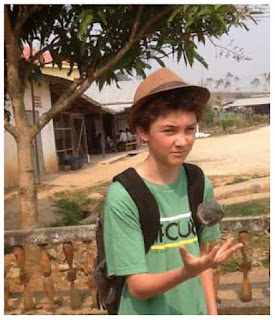
In spring of 2013, a group of 13 aspiring video journalists from Harvard-Westlake School in Studio City, California, spent ten adventurous days in Laos immersing themselves in the culture, volunteering at preschools, and interviewing cluster bomb victims. Forty years earlier, the U.S. military ceased its air war in Southeast Asia, but in the present, unexploded ordnance (UXO) accidentally detonates and maims or kills a Laotian farmer or family member once a day on average. An estimated 80 million "bombies," each about the size of a tennis ball, are still "live" today. The students returned home determined to publicize the victims’ stories through video, writing, and visual art, thus giving voice to an innocent people still living under the shadow of the Vietnam War.
Student tosses an inert "bombie" into the air.
Playing with found objects (some are still "live")
maims many Laotian children every year.  Note the
old mortar shells used as banisters in the background.

The trip was hosted by Give Children a Choice, and operated by Friendship Tours World Travel, an experiential learning abroad program. How did a unique study- travel program like this—one that involves high school students and such a somber topic—come about?  It began in 2005 when Alethea Tyner Paradis, then a history teacher, founded Friendship Tours to give her students an immersive educational experience that was lacking in mainstream youth tours.

"In 2005, with U.S. troops stationed in Afghanistan and Iraq, the world was reflecting on ‘the lessons of Vietnam," said Alethea. "It was the 30-year anniversary of the fall of Saigon, and it occurred to me that our nation hadn’t learned many important lessons from our controversial military adventures in South East Asia." Alethea developed an integrative program that invites students to understand war-- and the benefits of diplomacy and negotiation—from the perspective of people who live with war’s aftermath. The first trip was to Vietnam, and the program expanded to include Cambodia, Laos, Myanmar, Cuba, and Rwanda. Alethea directs Friendship Tours and related activities year-round.
At a safe distance, students detonate cluster bombs that are
surrounded by sand bags.  Both students wrote reflection
pieces describing this experience.

Harvard-Westlake’s Visual Arts Chair Cheri Gaulke and Emmy-award winning journalist Jeff MacIntyre chaperoned the 2013 "Laos Investigative Journalism Adventure," teaching video-recording, interviewing skills, and editing techniques on site. Staff from Give Children a Choice accompanied the group from the arrival in the Laotian capital of Vientiane, through bomb-ravaged Xieng Khouang Province, to the serenity of scenic Luang Prabang. Students interviewed UXO survivors, walked the safe zones along a cluster-bomb-infested agricultural field, observed a bomb- clearance team at work, and participated in the clearance process. Juniors Kayla and Hana assisted with detonating the bombs (see photo) from a safe distance of 0.75 mile.
Laotian child and American student play patty cake.


Students are now editing their documentary films, with a planned screening at Harvard-Westlake School in October 2013. They’ve committed to advocating for UXO clearance efforts and to helping families directly. For example, the students met Mr. Ye Lee who, while working in a field, lost both of his legs to a hidden cluster bomb. After hearing his story, the students were determined to raise funds to help him purchase equipment and supplies for the family farm.

At dawn, students offer food to monks, who rely on
charity as part of their vows of voluntary poverty, in
Luang Prabang.

Students interview and get to know some villagers,
including those who have been injured by UXO.


Students from more than a dozen schools have participated in Friendship Tours since 2005.  The cost ranges from $2,500 to $4,100 per traveler, depending on days of travel and group size.  Teachers travel free when accompanied by eight or more students.  Visit www.friendshiptoursworld.com and www.givechildrenachoice.org.  Email queries about upcoming trips to Alethea Tyner Paradis at Alethea@FriendshipToursWorld.com.


September 2, 2013

The U.S.S.R. and U.S. Came Closer to Nuclear War Than We Thought

A series of war games held in 1983 triggered "the moment of maximum danger of the late Cold War."


An ailing, 69-year-old Yuri Andropov was running the Soviet Union from his Moscow hospital bed in 1983 as the United States and its NATO allies conducted a massive series of war games that seemed to confirm some of his darkest fears.
Two years earlier Andropov had ordered KGB officers around the globe to gather evidence for what he was nearly certain was coming: A surprise nuclear strike by the U.S. that would decapitate the Soviet leadership. While many didn't believe that the U.S. had such plans, they dutifully supplied the Kremlin with whatever suspicious evidence they could find, feeding official paranoia.
The Western maneuvers that autumn, called Autumn Forge, were depicted by the Pentagon as simply a large military exercise. But its scope was hardly routine, as Americans learned in detail this week, for the first time, from declassified documents published by the National Security Archive, a Washington-based nonprofit research organization.
To the Russians, it could easily have looked like a genuine preparation for a nuclear strike, the documents revealed: A total of 40,000 U.S. and NATO troops were moved across Western Europe, including 16,044 U.S. troops airlifted overseas in 170 missions conducted in radio silence.
More ominously, U.S. and NATO officers practiced the procedures they would have to follow to authorize and conduct nuclear strikes in an unpublicized exercise called Able Archer 83, shifting their headquarters as the game escalated toward chemical and nuclear warfare. In communications, they several times referred to non-nuclear B-52 sorties as nuclear "strikes" -- slips of the tongue that could have been intercepted by Soviet eavesdroppers.
While historians have previously noted the high risk of an accidental nuclear war during this period, the new documents make even clearer how the world's rival superpowers found themselves blindly edging toward the brink of nuclear war through suspicion, belligerent posturing and blind miscalculation.
In a coincidence that could have proved catastrophic, the script for the maneuvers dovetailed snugly and perilously with the Soviets' fears that they were under threat, coupled with nagging doubts about their ability to protect themselves from U.S. military might.
The problem with this brinksmanship was that it increased the risk of a nuclear exchange due to miscalculation, according to Nate Jones, a Cold War historian with the National Security Archive who edited and published the collection of more than 50 documents, totaling more than 1,000 pages, in three installments beginning May 16 and ending Thursday.
Ranging from presidential note cards to previously secret CIA reports, the documents describing Able Archer 83 offer fresh insight into a much studied but incompletely understood episode in the U.S.-Soviet rivalry. "This episode should be studied more because it shows that U.S. leaders might not have learned as much from the Cuban missile crisis [about avoiding accidental conflict] as they should have," Jones said.
In the current edition of the Journal of Strategic Studies, Israeli historian Dmitry Adamsky calls the 1983 war games "the moment of maximum danger of the late Cold War." Able Archer, he wrote "almost became a prelude to a preventative nuclear strike."
The March 1984 edition of Air Man Magazine , a rare detailed public account, called Autumn Forge "the biggest North Atlantic Treaty Alliance show of force of the year -- a test of military readiness in the context of NATO's deterrent mission." But the article emphasized the air lift, never mentioning rehearsal for nuclear war.
Even the troops on maneuver tried not to draw too much attention to themselves. At Dusseldorf Airport, the 45th Tactical Air Wing commander had his planes park away from the passenger terminal to keep a low profile. Most travelers, he was sure, were not even aware of troop activity at the airport.
But the Pentagon knew that the Soviets were monitoring his troops' every move. "The series of exercises are watched very carefully by the Eastern Bloc nations, just as we try to watch their exercises as closely as we can, to learn tactics and procedures," Air Force Maj. Gen. William E. Overacker told Air Man.
The impetus for the exercise came from the White House, "where they wanted to stare down the Soviet bear," said Jones.
Tensions had heated up that September, after the Soviet shoot-down of Korean Air Lines Flight 007, which had strayed into Soviet air space. The administration responded with stepped-up surveillance, and provocative naval maneuvers, and pressed for the deployment of new Pershing II missiles in Europe capable of reaching Moscow in less than ten minutes.
Considered in a vacuum, Able Archer 83, in which officer's at NATO's Belgium headquarters practiced their response to hypothetical chemical and nuclear conflict with a thinly-disguised Soviet Union, might not have seemed particularly threatening.
But for two years prior to Able Archer 83, KGB agents had been scouring the world for evidence of what the Soviet leadership in general -- and Andropov in particular -- believed were U.S. preparations for all-out nuclear war against the U.S.S.R.
The massive intelligence-gathering effort, called "Operation RYAN," pressured the KGB to find proof that the U.S. was planning a "decapitating" strike against Moscow with its nuclear forces. (The Russian acronym derives from Raketno-Yadernoye Napadeniye, or nuclear missile strike.)
According to an unclassified summary of the nuclear exercise scenario, prepared for the National Security Archive by a NATO historian, the war game began with briefings on an imaginary East-West conflict in the Middle East, including "Orange" -- that is, Soviet -- arms deliveries to Syria, coupled with unrest in Eastern Europe.
Rising tensions and a change in the Soviet leadership triggered an invasion by the Red Army of Yugoslavia, Finland, Norway and Greece, according to the exercise scenario. After the "Orange" Soviets finally attacked "Blue" -- U.S. and NATO forces -- with chemical weapons, NATO decided to respond with two series of nuclear strikes.
The Soviets certainly made no secret of their fears at the time. One key document, released by the Library of Congress, describes how Andropov repeatedly warned that the U.S. was approaching the "red line" leading to nuclear war when he met with veteran U.S. diplomat Averell Harriman in June 1983.
But President Reagan was unsure if the Soviets were really convinced that the U.S. was preparing a sneak attack on them, or were merely " huffing and puffing," as Reagan asked his ambassador to the U.S.S.R. in 1984.
There was skepticism in Washington about Andropov's sincerity. Three days after the end of Able Archer 83, the CIA issued a Top Secret Joint Net Assessment of U.S. and Soviet strategic forces that assured senior administration officials that the balance of forces "is probably adequate to deter a direct nuclear attack on the United States." It did not acknowledge the possibility of nuclear war through miscalculation.
Another Top Secret CIA analysis, written six months after Able Archer 83, shows how profoundly the spy agency may have misread the Kremlin's thinking. "We believe strongly that Soviet actions are not inspired by, and Soviet leaders do not perceive, a genuine danger of imminent conflict or confrontation with the United States," its authors wrote.
It acknowledged, however, that since the Able Archer exercise, the Soviet military had stepped up its activity and deployed new weapons and forces.
Even if his intelligence advisers were sanguine, Reagan himself was worried after the exercise that the Soviets genuinely feared the U.S. was preparing to commit nuclear aggression, writing at one point in his diaries that "I feel the Soviets are so defense minded, so paranoid about being attacked that without being in any way soft on them we ought to tell them that no one here has any intention of doing anything like that. What the h--l have they got that anyone would want."
Moscow's reaction to the November 1983 war games is not well documented, partly because obtaining material from Russian government archives has become increasingly difficult since the 1990s. "I wouldn't say it has stopped, but it's proceeding at a glacial pace," Jones says.
But Russia isn't the only country hanging onto some of the secrets surrounding the 1983 war scare.
The papers of former Washington Post reporter Don Oberdorfer include a summary of what Jones says may be the most comprehensive account of the Able Archer 83 ever written, a classified 110-page report completed in 1990 by the President's Intelligence Advisory Board.
The report has never been released, but Oberdorfer's notes, based on an interview with a confidential source, say it concluded that the 1983 "war scare was an expression of genuine belief on the part of Soviet leaders that US was planning a nuclear first strike, causing Sov(iet) military to prepare for this eventuality, for example by readying forces for a Sov(iet) preemptive strike."
The note concludes in telegraphic style: "If so, war scare a cause for concern."
Jones says the 1990 report to President George H. W. Bush may be the most comprehensive account ever written on what happened during those five days in November of 1983, but he's been fighting to get it declassified without success since 2004. "Until the President's Intelligence Advisory Board report is declassified, we won't know how close the U.S. came" to nuclear war, Jones said.
DOUGLAS BIRCH May 28, 2013
The Center for Public Integrity is a non-profit, independent investigative news outlet. For more of its stories on this topic go to publicintegrity.org.


August 29, 2013

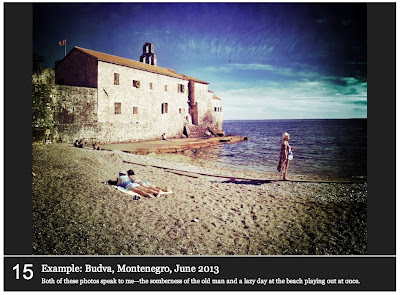
How to use your mobile device to create awesome travel images


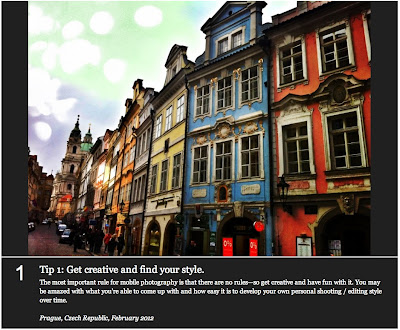
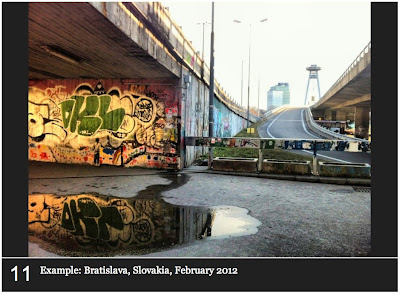
MOBILE PHOTOGRAPHY has become a full-blown movement. From San Francisco to Shanghai, amateur and professional photographers alike have been experimenting with various shooting and editing techniques on their mobile devices, finding they can achieve comparable and sometimes even more creative results than with their heavy cameras.
It’s been a few years since I switched into the smartphone realm, and my life as a traveler has changed completely. As an avid “fauxtographer,” as I like to call it, I believe the images taken and edited on phones and tablets can give professional photographers with expensive equipment and software a run for their money. Photo ops are often spontaneous and unpredictable, which is why being able to snap a quick photo with your phone over a traditional camera is sometimes a better option, especially while traveling. It’s a perfect hobby for travelers in transit.
While most traditional photography principles (composition, rule of thirds, etc.) also apply to mobile photography, there are some ways in which they differ thanks to the added versatility of portability and instant editing options. Here are a few tips to keep in mind when shooting and editing with your phone or tablet.


By Larissa Olenicoff


August 28, 2013

March on Washington organizers look back


Recollections of some of those who helped make the massive March on Washington happen 50 years ago.

WASHINGTON — As they look back half a century later, five organizers of the March on Washington for Jobs and Freedom recall the thrill of the day — the sense that the cause of civil rights would advance.
Of course they remember the stirring "I Have a Dream" speech delivered by the Rev. Martin Luther King Jr. to the giant crowd gathered before the Lincoln Memorial. But they also recall the fear that the march might not come off, that people wouldn't show up. Here are some of their recollections of that day, Aug. 28, 1963:
Clarence B. Jones
Clarence B. Jones remembers the "I Have a Dream" speech well — he was standing 50 feet behind King when he delivered it.
Jones was a lawyer, speechwriter and confidant of King and had helped draft the speech he was to deliver at the march. As Jones recalls, King was reading the prepared text when gospel great Mahalia Jackson shouted, "Tell them about the dream, Martin. Tell them about the dream."
King set aside his script and began speaking extemporaneously.
"I turned to the person who was standing next me and said, 'These people out there — they don't know it, but they're about ready to go to church,'" Jones said.
Jones, who with Stuart Connelly wrote the book "Behind the Dream: The Making of the Speech that Transformed a Nation," noted that King had spoken about his dream earlier, but those speeches had drawn scant attention. This speech, however, was carried live on television, and King, perhaps inspired by the huge audience in Washington and across the country, rose to the occasion.
"I had heard and seen Martin King speak many times before," Jones said. "Never ever had I heard him speak like that. Nor did I ever hear him speak like that ever again."
Jones, 82, is a visiting professor and diversity scholar at the University of San Francisco and a scholar at Stanford University's Martin Luther King Jr. Research and Education Institute.
He plans to be in Washington for the 50th anniversary.
Reflecting on the speech 50 years later, Jones said, "When I hear people say, 'Well, you know, much of the dream hasn't been realized' … that's true. There are cracks in the dream. But I have to remind people there are no signs anywhere in this country that say, 'Drinking fountains for colored only' or 'whites only.'"
Eleanor Holmes Norton
She had heard talk of plans for a giant march on Washington, but nothing had been nailed down and the question loomed: Could civil rights leaders pull it off?
Then, Eleanor Holmes Norton recalls, "I got the call, saying it is going to happen."
Holmes Norton, then a 26-year-old Yale Law School student from Washington, D.C., had been working in Mississippi for the Student Nonviolent Coordinating Committee. "The call" was from the committee, asking her to come to New York to join the staff organizing the march.
She went to work from the march's Harlem office. She remembers the address: 130th Street and Lenox. She recalls the challenge: "The march was an unprecedented exercise. Nobody could remember a mass march on Washington for anything, certainly not civil rights."
The day of the march, she boarded a plane to Washington, and before landing she could see the crowds assembling from the air — "enough to tell me the march would be successful."
Later, she took in the view from the Lincoln Memorial. "What was most impressive for me, after working on the march for weeks, was looking out from the base of the Lincoln Memorial itself and noting that I could not see to the end of the crowd," she said.
She recalls being moved deeply by one speaker after another. When it finally came time for King to speak, she thought to herself, "He had better be very good, because everything that went before him, I thought, was better than anything I had ever heard.'"
Holmes Norton, 76, went on to become the first female chair of the Equal Employment Opportunity Commission, an agency that, she notes, was a key demand of the march. She is in her 12th term as the District of Columbia's nonvoting delegate in the House. She will be participating in the anniversary, including using the event to highlight another longtime cause: D.C.'s lack of voting power in Congress.
Norman Hill
On the day of the march, Norman Hill accompanied civil rights leader Bayard Rustin, one of the organizers of the event, on a visit to the National Mall, hours before the march was scheduled to begin.
Hill, then 30, was New York-based national program director for the Congress of Racial Equality. He became staff coordinator for the march, recruiting people to participate and raising money to help pay travel costs. But on that hot August morning, he and Rustin found the Mall still largely empty.
"I remember Bayard being surrounded by reporters who peppered him with questions. 'Where are the people? Is the march really going to take place?'" Hill recalled.
"Bayard reached into his pants pocket and pulled out a round watch, and inside his jacket pulled out a piece of paper, and looked back and forth at the watch and piece of paper and said, 'Gentlemen, everything is going according to Hoyle, right on schedule,'" Hill added. "What the reporters didn't know is that the piece of paper was blank."
But in time the crowd grew — and grew and grew. When the march began, Hill recalls, the crowd was so eager to move that the march leaders had to rush to take their places at the front of the column.
He says that although the march is remembered as the largest civil rights demonstration in the nation's history, it also was intended to call attention to economic issues, such as a massive federal jobs program.
He looks back upon the day as a seminal moment in the nonviolent civil rights movement.
"It did away with the stereotypes of blacks as troublemakers," he said. "For me, the march was the fulfillment and implementation of the principles, vision and strategies of my mentors, A. Philip Randolph and Bayard Rustin. It solidified for me my faith in them and their place in American history as great, monumental figures."
Hill is now president emeritus of the A. Philip Randolph Institute in Washington, named after the civil rights and labor leader and an organizer of the march.
Rachelle Horowitz
Rachelle Horowitz was the "bus lady."
She was a 24-year-old civil rights activist from Brooklyn assigned to serve as transportation coordinator for the march.
It was a tougher job than people today can imagine in the high-tech age, she says. When she talks to students, she mentions her use of mimeograph machines, "and they go, 'What?'"
"I say to kids, Dr. King gave that speech without Jumbotrons on the Mall," she said, noting how difficult it was for the crowd way down the Mall to see the speakers at the Lincoln Memorial.
"By the end of the day, there was really this moment when you thought, by God, we can have a beloved community, that everything Dr. King and John Lewis talked about can come true," she said.
But that hope, she noted, was dashed weeks later by the bombing at the Sixteenth Street Baptist Church in Birmingham, Ala. Four black girls were killed in the blast.
Horowitz went on to become political director for the American Federation of Teachers before retiring. She plans to be back on the National Mall for the 50th anniversary.
Joyce Ladner
Joyce Ladner was a 19-year-old college senior from Mississippi with a stage pass to history.
Thanks to that pass, she was on the podium, and she remembers looking out at the crowd. She says it was "the most extraordinary thing" she had ever seen.
Before them, stretching into the distance, was a giant crowd that seemed to go on forever.
"I dare say that Martin Luther King and no one else on that podium had ever seen that many people together before," Ladner said.
Ladner was a student at Tougaloo College in Mississippi and a field secretary for the Student Nonviolent Coordinating Committee when she went to New York to work on organizing the march. She talked at churches, synagogues and union halls in the New York area about the civil rights struggle in the South to raise money for the travel costs of those who wanted to attend the march.
"We were trying to build a national base of support," she said.
On the day of the march, she first picketed the Justice Department to protest the arrest of three SNCC colleagues jailed in Georgia for sedition when they attempted to register voters. Then she headed over to the National Mall. She says it was still early in the morning, "and there weren't many people there at all."
She grew worried. "Are the people really going to show?" she wondered. Then about 8 a.m., busloads of people, mostly black but also white, began arriving with banners.
"And they just kept coming."
She recalls standing with Josephine Baker, the black Parisian nightclub legend, and Hollywood stars, including Harry Belafonte, Marlon Brando, Sidney Poitier, Paul Newman, Joanne Woodward, Diahann Carroll and, she notes with a laugh, Charlton Heston, whose politics later veered to the right.
Ladner says that when reporters approached Lena Horne for an interview, the singer-actress "thrust [her] in front the camera and said, 'Interview this young woman, because she lives in the Deep South. She can tell you the real story.'"
Looking back, Ladner says it's disappointing that King's "I Have a Dream" speech — and only part of it — is what most people remember about the day.
"I think it shortchanges him," she said. And people, she said, "often quote the more optimistic parts of the speech. They don't really talk about how to achieve his dream." The march, after all, was for "jobs and freedom," and yet black unemployment remains a serious problem.
Ladner, 69, who went on to become a prominent sociologist who served as interim president ofHoward University in Washington, says that after the march, she knew the event would generate additional support for the civil rights movement.
"But we were going back into the same conditions," she said. "The march would not have any effect on those Southern sheriffs and their deputies at all. That was our reality."
A few weeks later, she was on a school bus headed to Birmingham for the funeral of the four black girls killed in the bombing of the Sixteenth Street Baptist Church.
Her stage pass has been displayed at the Mississippi State Archives but is being returned to her. "It is the one memento I have that I want to pass on to my son and grandson," she said.

By Richard Simon